
Homeopathy in Ghana and the Development of Homeopathy in Africa
By Richard Pitt
The Ghana Homeopathy Project, (https://ghanahomeopathy.com/) working under the charity, Homeopathy in Africa, has been active in Ghana for 20 years. It continued the work by Homeopaths without Borders (Netherlands) and has had a continued presence in the country since that time. The Ghana Homeopathy Project has delivered a range of educational initiatives, including a four-year professional training programme, provided ongoing support to practicing homeopaths, and assisted in establishing two homeopathic clinics in rural Ghana near the Togo border.
The primary clinic and teaching centre has been based in Ghana’s Volta Region, near the Togo border, and a teaching programme remains active there today. Over the years, a number of professional training courses were developed, including a four-year part-time course that graduated approximately 15 practitioners in 2022. The curriculum was accredited by the Society of Homeopaths in the UK and delivered in partnership with several homeopathic schools in the United Kingdom.
Since that time, we have been supporting many of the graduates of the programme as they start their practices. As in many countries, the transition from graduation to practice is not easy, and in Ghana, where the economic realities can be challenging, we saw the need to further support graduates into practice. This work continues in a variety of ways, including supporting new practices, strengthening existing clinics, and assisting outreach clinics. One of the greatest challenges remains financial: generating sufficient income to sustain a practice while serving communities with limited resources. Also, there are some people calling themselves homeopaths who use various machines to both diagnose and prescribe and that is seen as “modern” homeopathy whereas our more “traditional” style is not recognized so much.
Even though Homeopathy has been practiced for decades in Ghana it is still not a recognized profession. Therefore informing and educating the general population on the benefits of Homeopathy is an important task. Additionally homeopathic remedies, as we know, are rather small, and for some people this is hard to accept. There is a preference for “large” pills, even injections and the subtlety of homeopathy is not easily explained.
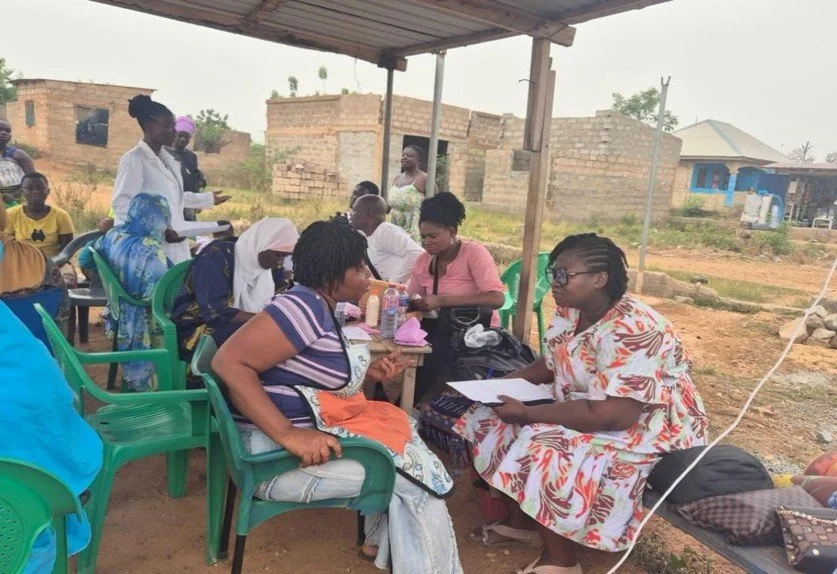
Six graduates working in an outreach clinic outside Accra, Ghana.
Three years ago we started a Ghana-based charity, the Homeopathy Education and Practitioners Association (HEPA) www.hepa-ghana.org . This organization has established a three-year training programme (1 yr. certificate and 2 yr. diploma) and is working with the Ghanaian government to have the programme registered and recognized by the department of Traditional Medicine Practitioners Council (TMPC). The TMPC is looking at how best to regulate and recognize various forms of Complementary and Alternative Medicine, as well as Traditional Medicine and it expressed how it was happy that an organization like HEPA is now coming forward to support the development of homeopathy through education and professional development. At this juncture our application has been received - which includes our detailed curriculum and professional standards - and we will be waiting for further feedback and comments as we work together.
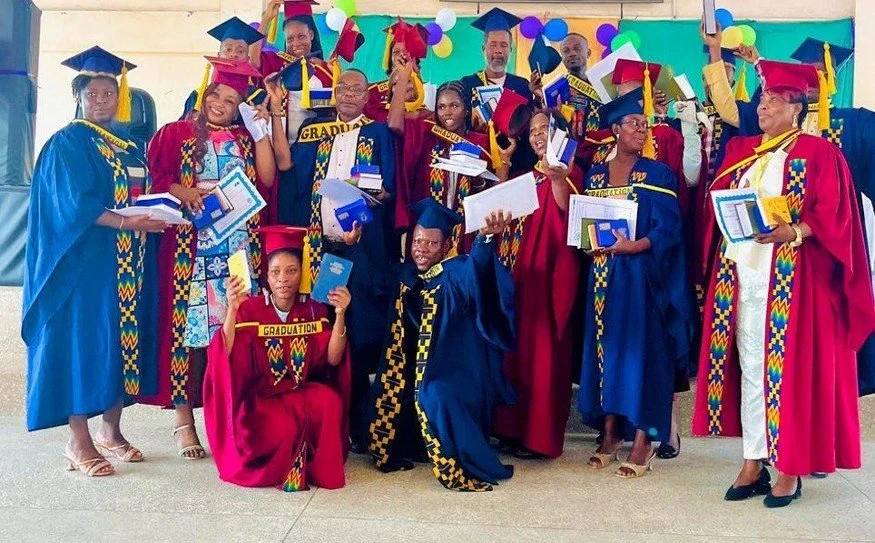
At the end of the 1st year certification programme there was an excellent celebration with a formal bestowal of certificates. Attending the graduation ceremony were representatives from TMPC.
HOMEOPATHY AS PART OF TRADITIONAL, COMPLEMENTARY AND INTEGRATED MEDICINE (TCIM) IN AFRICA AND BEYOND
In February, a two-day conference in Nairobi, Kenya was held on Traditional, Complementary and Integrated Medicine (TCIM). It was entitled the East Africa Traditional, Complementary and Integrative Medicine (EA-TCIM) Forum and had representatives from Kenya, Tanzania, Uganda, Rwanda, South Sudan and perhaps other countries too. This conference followed on from similar conferences in New Delhi in December and in Rio de Janeiro in October 2025. An organization called the Traditional, Complementary and Integrative Healthcare (TCIH) Coalition is part of the planning of these conferences and is addressing the World Health Organization’s (WHO) goals of integrating Traditional and Complementary Medicine into healthcare systems around the globe as part of its Universal Health Coverage (UHC) mandates for 2030. There is therefore a global push to integrate TCIM into health care systems and to seek the best ways to regulate, integrate and establish standards of practice. However, there are valid concerns that the WHO may restrict what is considered a valid system of medicine to be included and some animosity toward homeopathy already exists within the WHO, this needs to be recognized and countered if required.
The International Council for Homeopathy (ICH) is one organization representing the homeopathic profession within TCIH, and HEPA-Ghana (https://hepa-ghana.org/) is a member of the ICH representing the homeopathic profession from Ghana. The Kenyan Society of Homeopaths (https://kenyansocietyhomeopaths.org/), is also a member of ICH and two board members attended the conference in Nairobi, and one was on a panel of speakers. The ICH recently had its annual conference in Sofia, Bulgaria which was held alongside the conference of the European Central Council of Homeopaths (ECCH). ICH members are predominantly from European countries, but also include Japan, Hong Kong, Macau, Ghana, Kenya, Eswatini, Israel and the U.S.A. There are now three African countries represented in the ICH. The organization is in the process of creating a new website and reviewing its mission of how best to be an international global body representing homeopathy. One of the areas it has explored is in describing how homeopathy is practiced around the world and the different regulatory mechanisms in which homeopathy is practiced. As the member organizations mostly represent non-medically licensed professional homeopaths, it has an interest in ensuring that homeopathy can be freely practiced by as many people as possible. The goal is to establish a self/peer-regulated profession, where the profession itself defines its standards of education and practice, while working within the legal boundaries that define the practice of Complementary Medicine in various countries.
In Europe, for example, one must be a doctor to practice homeopathy in some countries, e.g. France and Spain. In Germany one must have a Heilpraktiker license which complementary practices work under. In Bulgaria, where we recently had the ICH conference, a law passed two or three years ago that now mandates only doctors can practice homeopathy. In the UK and the Scandinavian countries, as well as The Netherlands, homeopathy is practiced by both doctors and non-medically licensed professional homeopaths. The UK, as an example functions somewhat under common law, especially in regards the practice of Complementary and Alternative Medicines, and various professions choose their own route for their profession from a self-regulated model to statutorily regulated models. The latter is the route that Osteopathy took in the late 1970s’, which then excluded some traditional osteopaths who didn’t want to move in this direction. Some felt this diluted the quality and integrity of the profession. A similar debate existed between medical herbalists and traditional herbalists and in the U.S. between Naturopathic Doctors (ND’s) and traditional naturopaths, the former choosing to go the licensure route. Laws can vary in each state of the U.S. as to who can practice various medical modalities, and the legal boundaries are mostly defined through medical licensure.
HOW TO INTEGRATE TRADITIONAL MEDICINE AND HOMEOPATHY IN AFRICA
As the homeopathic profession in various African countries seeks to evolve and to be recognized and accepted by governments and society at large, questions arise as to the best way to develop these practices. This is part of the agenda of the recent conference in Nairobi, where the words “regulation”, “research” and “evidence based” were frequently used. This is also part of the WHO docket in seeing how best to integrate TCIM into healthcare systems. Many of us are familiar with the term “Evidence Based Medicine” as it has been used against homeopathy for quite some time now. Therefore, homeopathy organizations like ECCH/ICH need to be part of the dialogue to define what we mean by evidence and not simply the narrow interpretation of those with a vested interest to dismiss homeopathy and other natural therapies.
The Nairobi conference had many traditional practitioners there, and some professional traditional medicine organizations, including the National Traditional Health Practitioners Association (NATHEPA). Many traditional healers have been reluctant to accept oversight from the Ministry of Health in many African countries, seeing their work as an inherited part of their culture and not just a medical practice that requires government oversight, licensure and ultimately taxation. Why would they need to get permission from the government through a license which they have to pay for when they have been doing this work for generations? It is built into the cultural fabric and not restricted by a narrow definition of what is legitimate practice. For example, NATHEPA in Kenya is registered under the Ministry of Culture, not the Ministry of Health, but a new health act in Kenya, if passed, would bring NATHEPA and other Traditional Healers under the Ministry of Health and a stricter regulatory model.
The Kenyan government has been seeking to find ways to regulate and define standards for Traditional Medicine for some years and has included Complementary and Alternative Medicines into the same strategy as Traditional Medicine. There is a department of Traditional and Alternative Medicine in the Ministry of Health and the goal is to produce a new law which would mandate a new board to define standards of education and practice for all Traditional and Alternative practices in Kenya. However, the proposed bill has got stuck for many reasons but the recent conference in Nairobi may help it move forward. Neighbouring Tanzania has had a simple and effective regulatory mechanism for homeopaths for some years, but the Kenyan government is seeking to establish a large board for all alternative therapies as well as traditional healers which may make it difficult to set up appropriate and effective models of education and practice. Also, it would likely lack the experience and knowledge of many practices but is an example of a more regulated, licensure model, run by the government and not by independent professional bodies.
The possible health bill mandated that alternative medicine practitioners, including homeopathy, would have to do a minimum of four years in school and a full one-year internship programme. There was no other option and, in this way, it follows the model in South Africa, where students start studying at age 18-20 doing a four year undergraduate degree followed by a 2-3 year Masters programme. This would only work within a university structure and where government funds would be available for students, which even in South Africa, is not available beyond an undergraduate level. This means that many students leave after 4 years and do not practice homeopathy even when doing a 4 year undergraduate degree.
One possible advantage of this model is that it would recognize homeopathy and other therapies as part of the Kenyan health care system. However, it is questionable if there would be a high demand from young adults who would be willing to take the risk of studying homeopathy where post-graduation job opportunities are limited. It would also be very difficult to get the necessary funding to set up such a programme. Also, it could dilute standards of good homeopathic practice as there may be a lack of experienced practitioners to teach and the amount of homeopathy taught may be limited as it is mixed with necessary medical subjects. So, concerns are there that if such a strategy is imposed, it would stifle further growth of homeopathy.
Another issue is of course, money. After the East Africa conference, the Kenyan government produced a well thought through document as to how to integrate TCIM into the Kenyan health care system. This included a regulatory model, research needed to produce “evidence” and many other things needed to create an integrated model. Even though well developed, the amount of funds they stated they needed was extreme - $37 million dollars! Where that money will come from remains to be seen, but it seems to be an overly complex, bureaucratic and unnecessary vision. It is a highly centralized model and the focus on research may only lead to unnecessary research into efficacy and not exploring the existing empirical knowledge base already available. It also raises fears that the terms “regulation” and “evidence” are simply control mechanisms aimed to maintain economic and political control by the government.
In Ghana, there currently seems to be more flexibility and the TMPC department is in process of recognizing our 3-year diploma programme. But again, they have discussed the possibility of having to add another 4th year to degree level for homeopathic training and to be able to practice and also by injecting their own licensure exam. They want to develop various professions and are happy to bring homeopathy into the healthcare system. However, in contrast to the self-regulatory and diverse training options available in Europe and the U.S. they are still conforming to a conventional degree style programme. There is also currently a legal dispute in Ghana between the TMPC and Ghana Alternative Medical Practitioners Association as to whether TMPC has the legal authority to regulate Complementary and Alternative Medicine in Ghana.
Homeopathy is also found in other African countries, including Nigeria, Malawi, Zambia and Eswatini, but there is not any formal integration there. Eswatini has had a long-standing project there, called the Swaziland Homeopathy Project, run by a U.K. trained osteopath and homeopath, Barbara Braun. It has negotiated with the government for members of the project to be able to practice freely in Eswatini, but in the past they had to fight for the right to practice as there were some people against homeopathy in the health ministry. They hold many outreach clinics in different parts of the country and gain permission from the government to hold their clinics. It is a good example of a more self-regulated profession and could be a model for other countries. However, in neighbouring South Africa, where there are two homeopathic degree/masters programmes, accepted by the government, only graduates of these programmes can practice and all have to be registered by the Allied Health Practitioners Council (AHPC) of South Africa. This board does not allow any other homeopath or practitioner to practice, even teaching basic homeopathy to lay prescribers. An eighty year old woman was apparently threatened with prosecution for teaching South African Anglican pastors the basics of homeopathy! Other trained homeopaths who move to South Africa are not allowed to practice unless they return to college for at least two years. Therefore, this highly regulated model may protect the profession but may also restrict it by limiting who can practice.
CONCLUSIONS
This article has explored the many ways homeopathy can be practiced around the world and in particular Africa and what is currently happening in various countries. As we explore how best to integrate homeopathy in various African countries there would seem to be three main models of regulation and practice.
Full time 4–6-year Degree/Masters/Doctorate programmes attached to a university.
Advantage: full recognition, government funding for tuition, adequate medical skills incorporated which allows full access to all communities and to work within the existing healthcare system.
Disadvantage: many don’t complete the programme, are not necessarily committed to homeopathy and move to easier or better paid working environments. Study begins after high school, with a lack of real understanding of homeopathy. Large dropout rate. Homeopathy can get subsumed under a plethora of other complementary therapies, and a possible lack of solid foundation in homeopathic principles. Homeopathy can be seen as an adjunct and practiced within an allopathic framework. There can be a lack of clinical practice opportunities.
Part time 2–3-year post-graduate programme for health professionals.
Advantage: students come ready with an existing degree in a medical field and are legally recognized to practice. Homeopathy can be added to their skill set and if the programme is solid, mature students can gain a good understanding of homeopathic principles and practice within two years, especially if one year is focused on supervision and clinical practice. Homeopathy can then be easily incorporated into the medical practice of practitioners from many fields and can be either the primary practice or an adjunct practice for medical practitioners. It may be integrated into a university or done privately but ideally costs can be controlled and practitioners should have funds to pay.
Disadvantage: it is not making homeopathy a stand-alone profession and it is possible that standards of training would not be optimal unless a well-developed programme is achieved with good personnel. It is questionable how much interest there would be from existing medical personnel and how best to adapt the course for those already in a busy work schedule. It would ideally be needed to be taught in a university institution, making the implementation of a programme like this more difficult.
Independent private part time training programme of 3-4 years:
Advantage: This is suited most in a self-regulated profession where standards of education and practice are established by the profession itself and where there is a liberal culture in who can practice homeopathy. It allows for greater freedom in determining the curriculums and standards of practice in which homeopathy can be done at various levels of professional skill; from basic, introductory and acute care which is achieved in a 1 yr. certificate programme to a full training for chronic care. This model can also fit into a soft regulatory model, working with the government as a partner but where the profession still is able to define its own standards for the profession. This also suits more mature students who come from many backgrounds and not necessarily a medical one, although it could also include medical practitioners.
Disadvantage: working outside the government system means that students would not get any funding to study and there can be a lack of coherence of the necessary standards of education needed for professional practice. Not having a medical background means that extra study of medical subjects is needed. Even then, graduates may not be accepted by orthodox medical practitioners. There can be a lack of recognition within society at large and the economic challenges of making a living doing homeopathy are greater. In the West, many people studying homeopathy may not need to make a living practicing homeopathy as a full-time profession and the percentage of students who do go into full-time practice is relatively small. There has been a need to develop professional organizations to support practitioners and to negotiate with government and other organizations as needed to support the legitimacy of the professional homeopath. In a culture where being called a Dr is important, not having a formal qualification may be limiting. However, all healers are simply called Drs in most African countries, whether they have a medical license or not.
This outlines possible options for the development of homeopathy in Africa, but it could also apply to other countries as well. Given the diversity of political environments in different countries, it may be needed to adapt the strategies of development and integration of homeopathy for each situation.
Richard Pitt:
Richard has lived and worked in four African countries for over eight years, including Ghana, Kenya, Malawi and Eswatini. He is a member of HEPA-Ghana board and of the Kenyan Society of Homeopaths and is Education Officer of the Ghana Homeopathy Project/Homeopathy in Africa. He is the author of eight homeopathy books and can be found at richardpitthomeopathy.com.